02 · Measure, understand, prevent
Health
Where bodies in motion meet technology.
Health is the question we put to the bodies we record. The tool we answer it with is called biomechanics: the close observation of the body in motion, in its physical, technical and expressive dimensions — whether it comes from live performance, sport, work or care.
Using advanced capture and analysis technology, we measure, model and interpret bodily dynamics in real settings. The goal: to better understand the mechanics of movement, improve performance, prevent imbalance, and pass that knowledge on through concrete tools.
This work is for artists, athletes, teachers, care staff, ergonomists, gesture professionals and institutions who work with and through the body. It is organised in three strands: the body in motion, performance, and risk prevention and the intelligence of gesture.
It is built together with the care sector and clinical research, to imagine together what movement analysis can bring to clinical research and to patient care. This knowledge about the bodies of this island is built here, with our tools and with the people concerned — not remotely, and not on imported models.
Three strands
What we observe
01
The body in motion
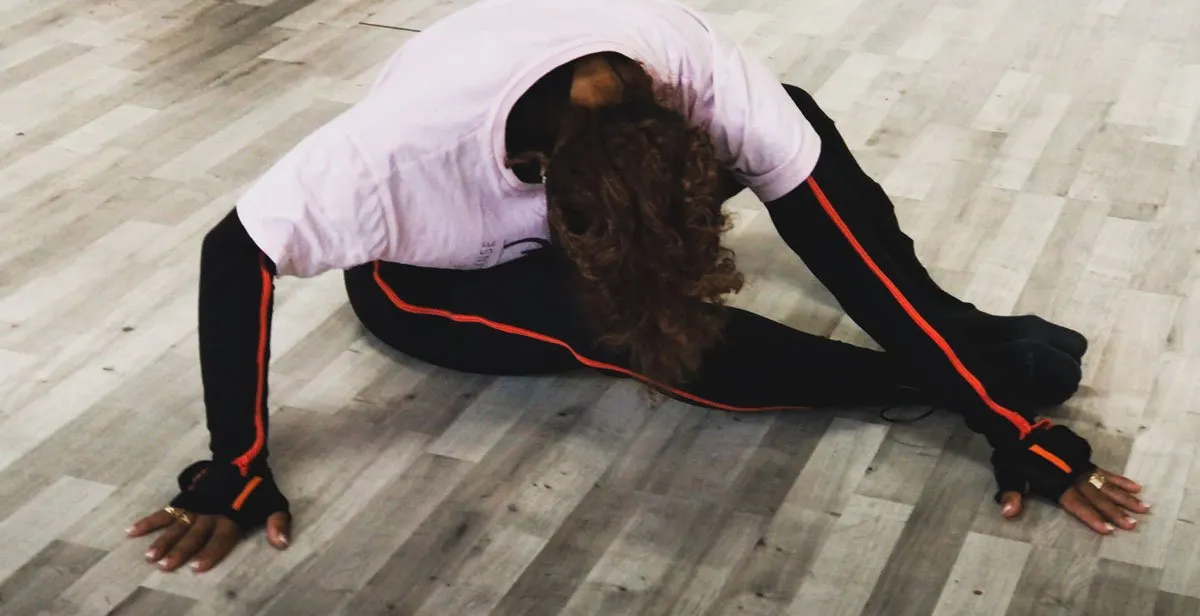
A body that dances, plays, carries or is in rehabilitation leaves traces in its movement that the eye alone cannot see: asymmetries, compensations, stiffness, fatigue setting in. Inertial capture measures them in real settings, without a lab, and makes it possible to follow how they change over time. We do this work alongside care professionals, whose role it is to interpret these measurements: we bring the tool and an eye for gesture, not the diagnosis.
02
Performance
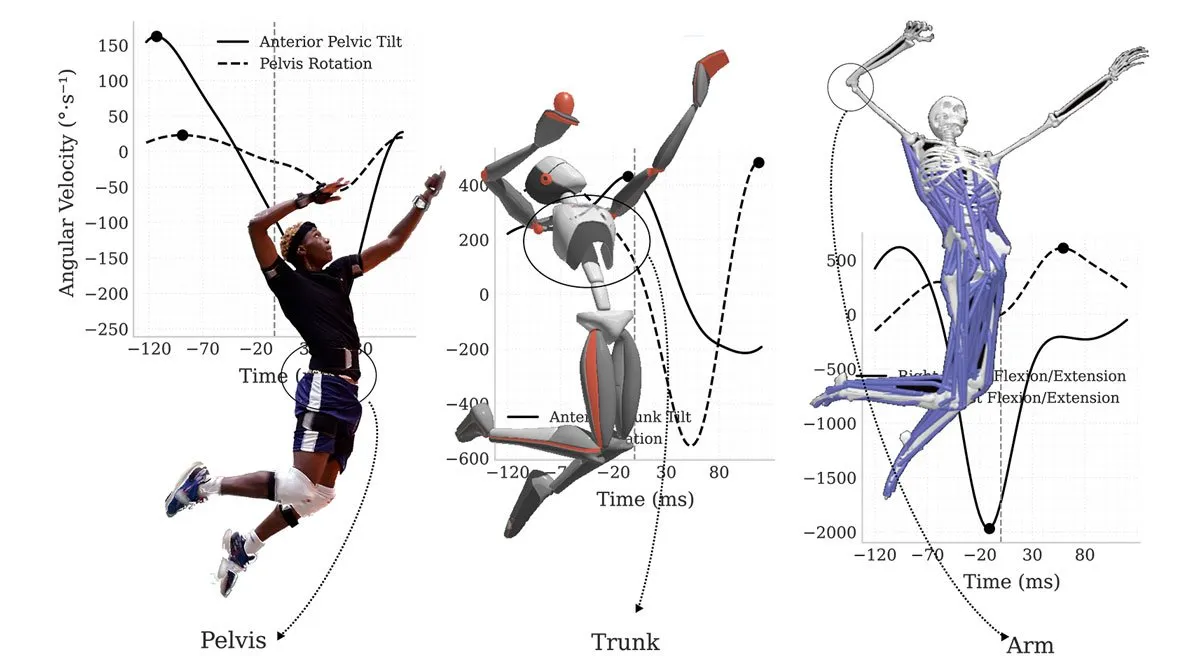
The athlete’s as much as the dancer’s: performance, particularly at elite level, comes down to details of precision, power and fluidity. We analyse the chain of a gesture — how momentum passes from the pelvis to the trunk, then to the arm — to understand what makes a movement efficient and what exposes it to injury. Our suits travel, so measurement happens in the field, close to the practice, for athletes, artists and the people who support them.
03
Risk prevention and the intelligence of gesture
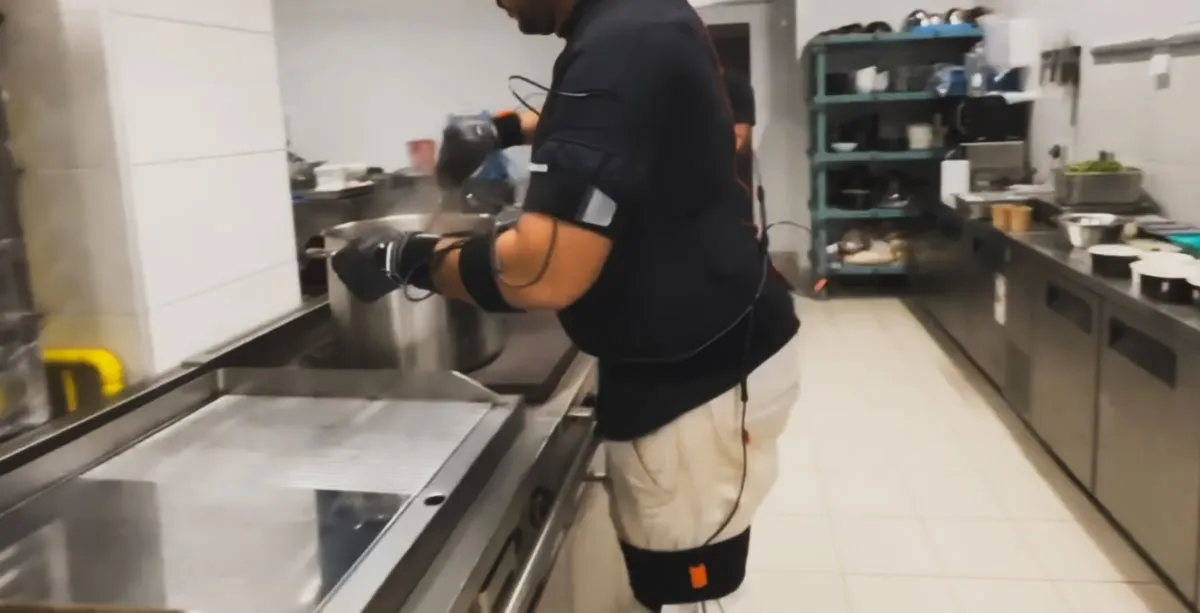
Repeated professional gesture wears bodies down: in kitchens, on building sites, on stage, and in care services themselves. Drawing on measurement and visualisation, we make effort visible, anticipate imbalance and encourage practices that respect the body. This awareness work extends to young people: in class or with the mobile studio, students discover their own gesture, motion capture and the professions around it.
We capture movement and performance.
To bring our approach to life, we are looking for
Partner organisations
Hospital departments, laboratories, universities, sports medicine and occupational health, bringing their analytical expertise to work on these questions together.
PhD topics
Opening research fields to doctoral students in sports science or occupational health, who analyse the data captured with our equipment, in our settings.
Researchers
Who know how to read and interpret movement, and want to bring medical science and artistic creation together.
Any other proposal
We are open to it: write to us at contact@sequencesephemeres.com.
Frequently asked questions
Who can take part in this work?
Anyone — any person or organisation interested in the body in action: performing artists, athletes, trainers, teachers, researchers, care or movement professionals, and simply the curious. No practice is judged too « minor » or too « marginal » to enter the conversation. What counts is the gesture, the wish to share it, and the willingness to explore.
Do you work with the medical world?
Yes, and it is a direction we want to strengthen. The roles are clear. We measure movement and make it readable; clinical interpretation belongs to health professionals. Motion capture is not a medical procedure, but it can become a valuable tool for those who provide care.
Do you accept outside projects or proposals for collaboration?
Yes, absolutely. We are always looking for new perspectives, unexpected crossings, hybrid forms. Whether it is a test, a performance, a residency or an experiment, do get in touch.
What kinds of practice interest you?
Every form of bodily expression: dance, theatre, sport, martial arts, ritual, improvisation, play, care, teaching. We set no strict boundaries — the whole point is to cross them, blur them, or draw new ones.
What if my proposal fits no category at all?
That may well be good news. This is a breathing space. We do not claim to know everything, or to anticipate everything. If you arrive with a new idea, an intuition, a vague but sincere urge, then you are already in the right place.
Why do you also work with schools and younger audiences?
Because we believe it is essential to introduce the tools and professions of digital creation early. Motion capture, 3D, the arts of movement and performance are not reserved for a circle of experts. By meeting students in their own schools, we plant seeds: curiosity, confidence, inspiration. And above all, a way of saying: you can create too.
Can I just come and watch, without performing?
Yes. Watching is part of the process. Some participants come to look, listen and understand. There is no obligation to move. This is also a space for awareness, for contemplation, and for discovering bodies in action.
Do you work with schools or training centres?
Yes. We develop sessions tailored to each age group and context: discovery workshops, demonstrations, artistic residencies in schools. The aim is to make the culture of gesture and technology accessible from an early age.
Do I need artistic or athletic training to take part?
Not at all. We welcome beginners as readily as experts. We believe in the intelligence of the body, whatever its history. It is often the least expected experiences that produce the most inspiring results.
Do you work outside Martinique?
We are based in Martinique, but our remit is regional and international. We are always open to invitations, collaborations or residencies elsewhere. If you think our approach could enrich a place or a project, write to us.
How do I get in touch or propose a project?
Nothing simpler: write to contact@sequencesephemeres.com, or call us. Every proposal gets an answer, even if it falls outside our usual scope. Especially if it does.
Let's get in touch
Do you have a project, an idea, a research question or simply the urge to collaborate? Let's write, experiment and share.